Project Overview
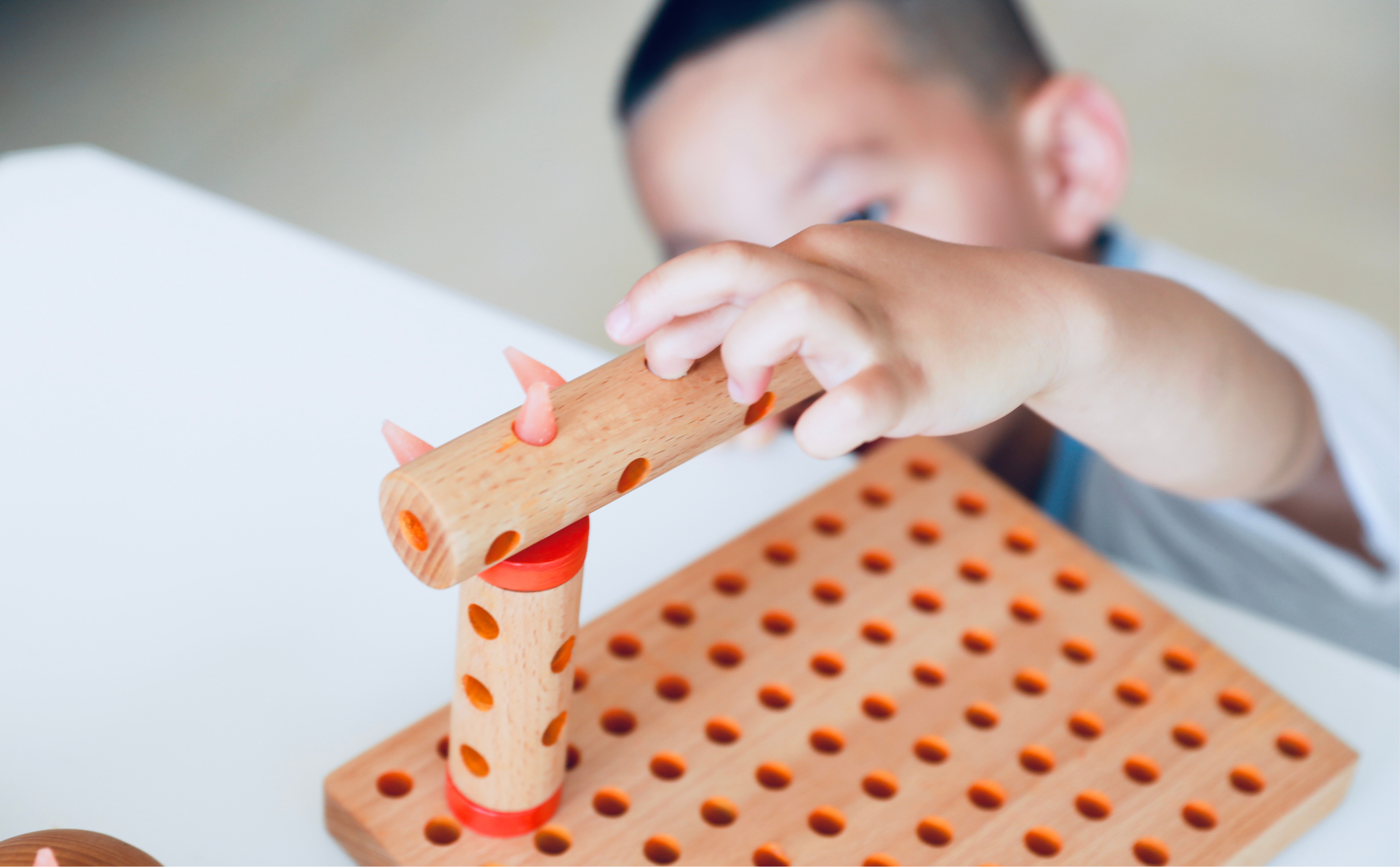
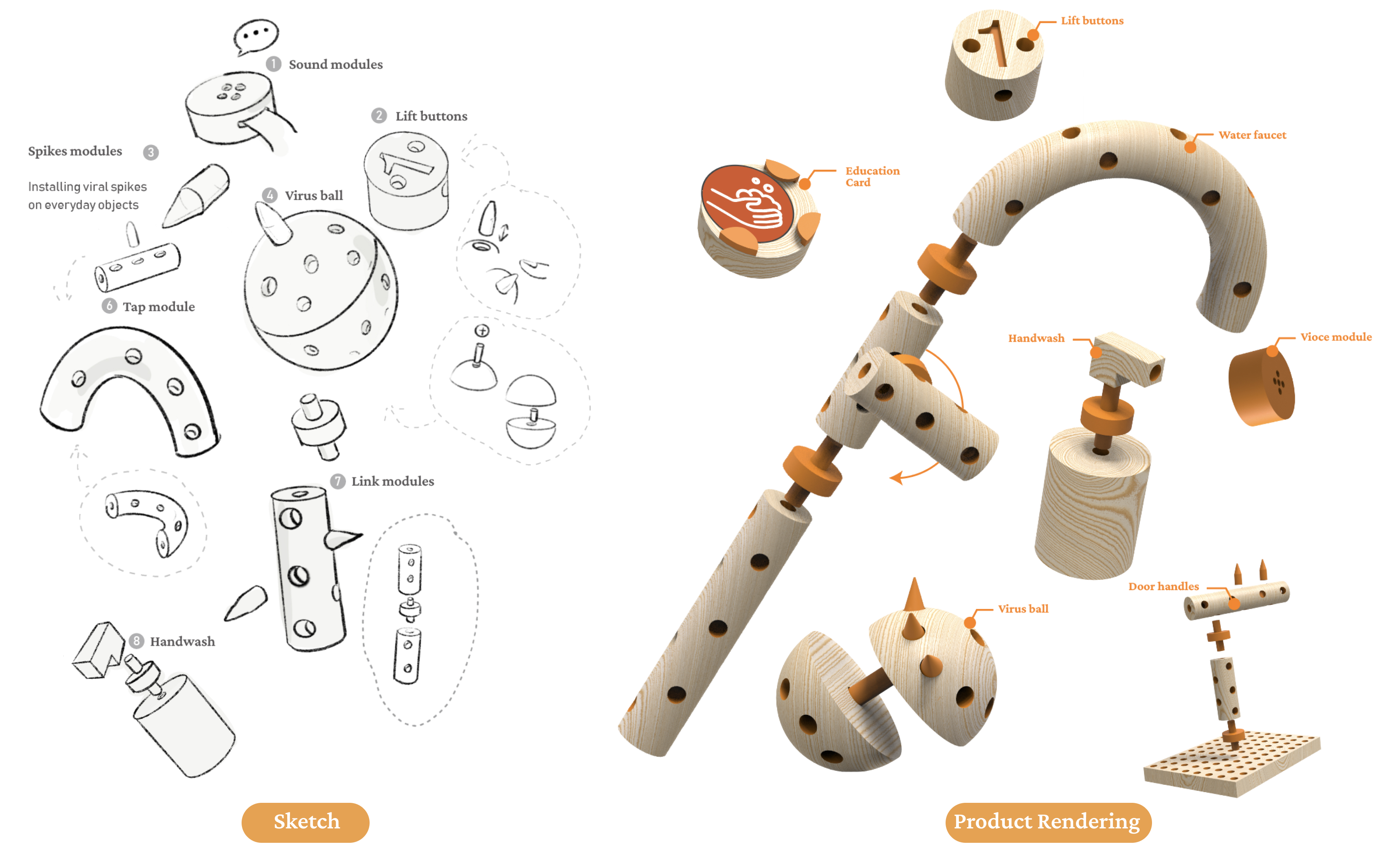
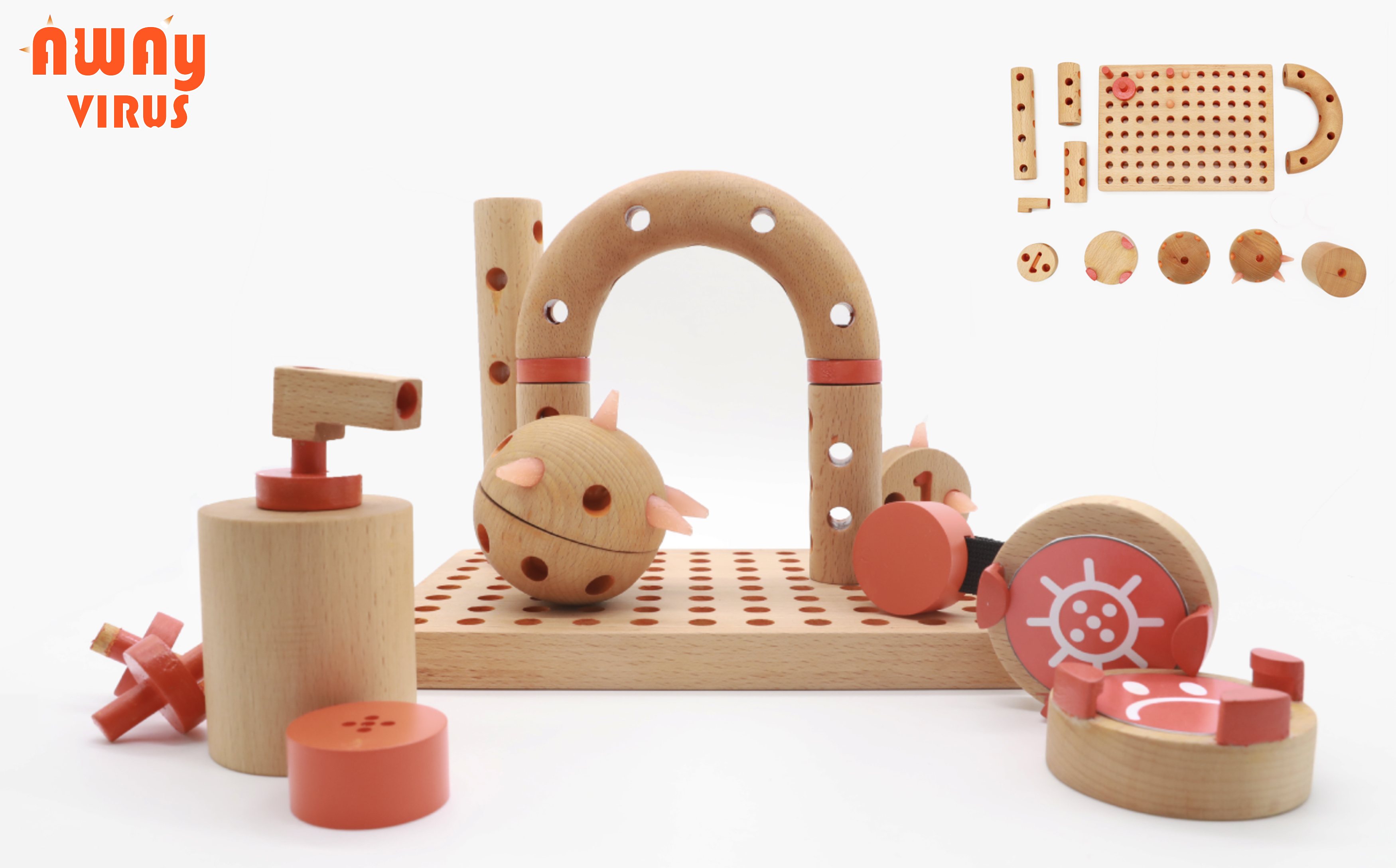
Awaryvirus is an educational tool designed to help parents teach their preschool children about viruses and raise awareness of proper protective measures, while also enhancing communication and understanding between them. The tool consists of two components: assembled models and educational cards, which can be used together. The assembled models can be configured to represent various objects, including viruses, taps, hand sanitizers, door handles, and lift buttons.
From Play to Protection
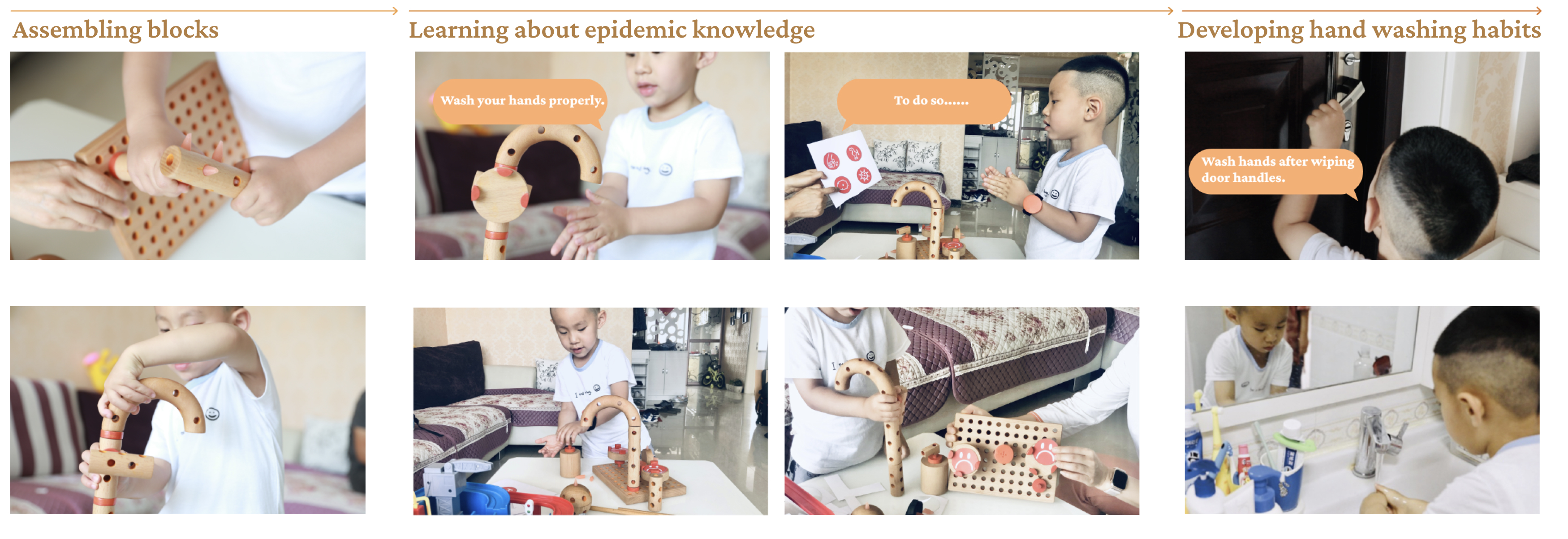
The experience begins with assembling playful block models of everyday objects and viruses, encouraging exploration through touch and creativity. Children then engage with colorful cards and sounds to discover how viruses spread and how to protect themselves. The journey ends with building water tap and hand sanitizer models, transforming learning into lasting handwashing habits.
Background
In the early 2020s, Covid-19 broke out, forcing much of the population to work and study from home. Daily life was profoundly affected by the epidemic. As Covid-19 became a normalized part of life, cultivating the right awareness and habits proved essential in preventing infection. This raises an important question: how can we help preschoolers develop awareness and learn effective self-protection methods?
Design questions
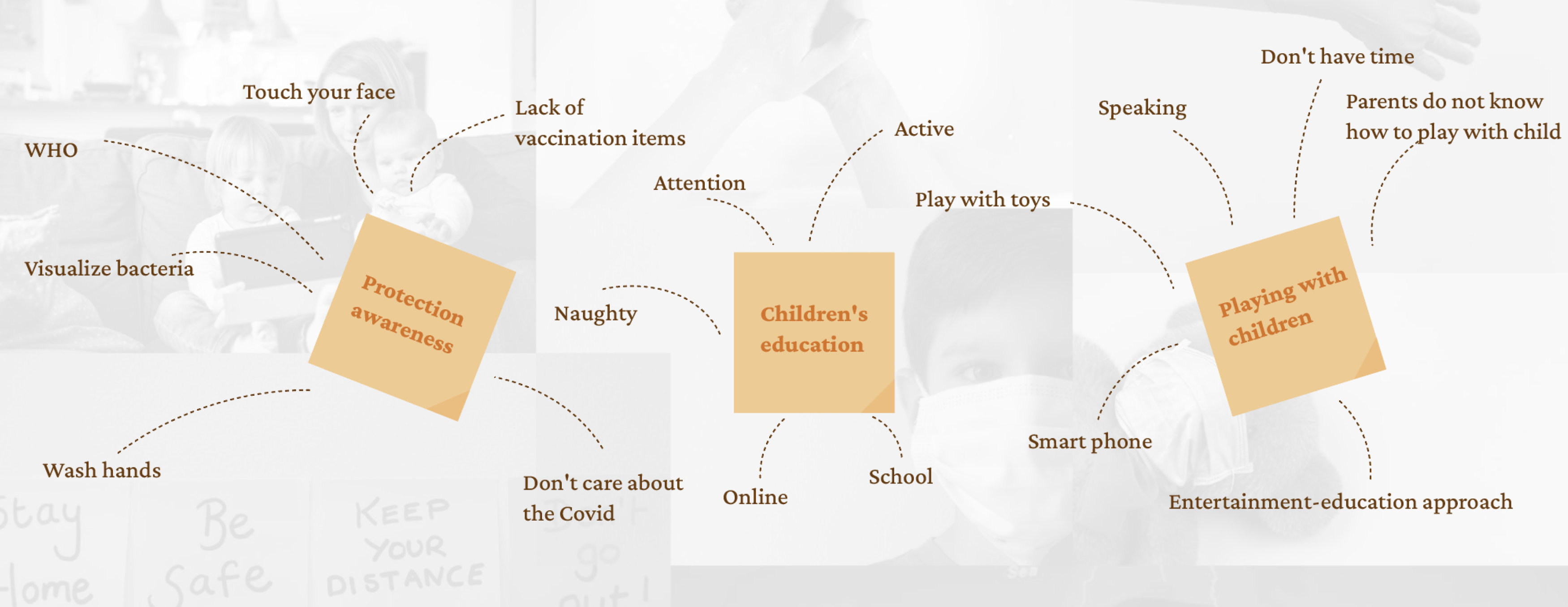
- How to properly help your child with self-protection?
Viruses are primarily transmitted through contaminated hands. According to the WHO, keeping our hands as clean as possible and avoiding direct contact with our faces can significantly reduce the risk of infection and help protect our health.
- Don’t know how to help your child develop a sense of protection?
As a vulnerable group, preschoolers can be challenging for parents to educate about what a virus is and how they can protect themselves.
- Not sure how to communicate with your child when you spend more time with them during home isolation?
When we have more time to spend with our children, how should we make the most of it? What kinds of activities or games should we play together?
Discovery Phase
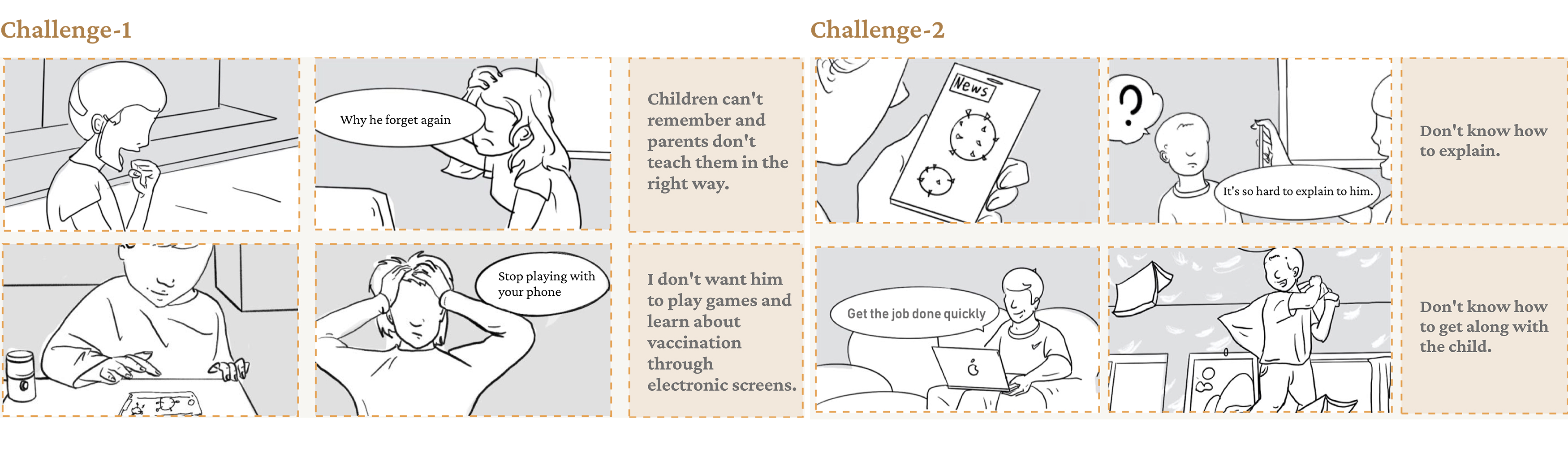
By interviewing parents from diverse backgrounds, I sought to understand how differences in knowledge and family roles influence the way they educate their children, as well as to identify the challenges and needs that arise in this process. I combined previous research questionnaires with expert interviews, using a storyboard approach to define the issues and uncover these needs.
Design challenges
Challenge1: Parents struggle to explain viruses in ways preschoolers can grasp, manage resistance to protective measures, and find meaningful activities during extended time at home
Challenge 2: Parents face difficulties in helping preschoolers form lasting hygiene habits, as children may forget or resist instructions and fail to understand the reasons behind them. Reliance on physical punishment is ineffective, and parents often wish to avoid screen-based learning due to concerns about eye health, leaving a gap for engaging, age-appropriate, and non-digital educational solutions.
Design needs
Support parents in building positive relationships with their children. Provide age-appropriate ways to explain viruses and self-protection. Help children develop lasting hygiene habits. Equip parents with effective, conflict-free teaching methods. Offer educational approaches that avoid reliance on electronic screens.
Design idea
I aim to design an educational tool that helps parents support their children in developing good hygiene habits and building awareness of self-protection.
Ideation
After the design ideation phase, I developed four distinct design concepts: Daily Objects Building Blocks, Voice Alert Wristband, Virus Clay, and Educational Puzzles, Books, and Whiteboard. I then evaluated each concept, analyzing their respective strengths and weaknesses.
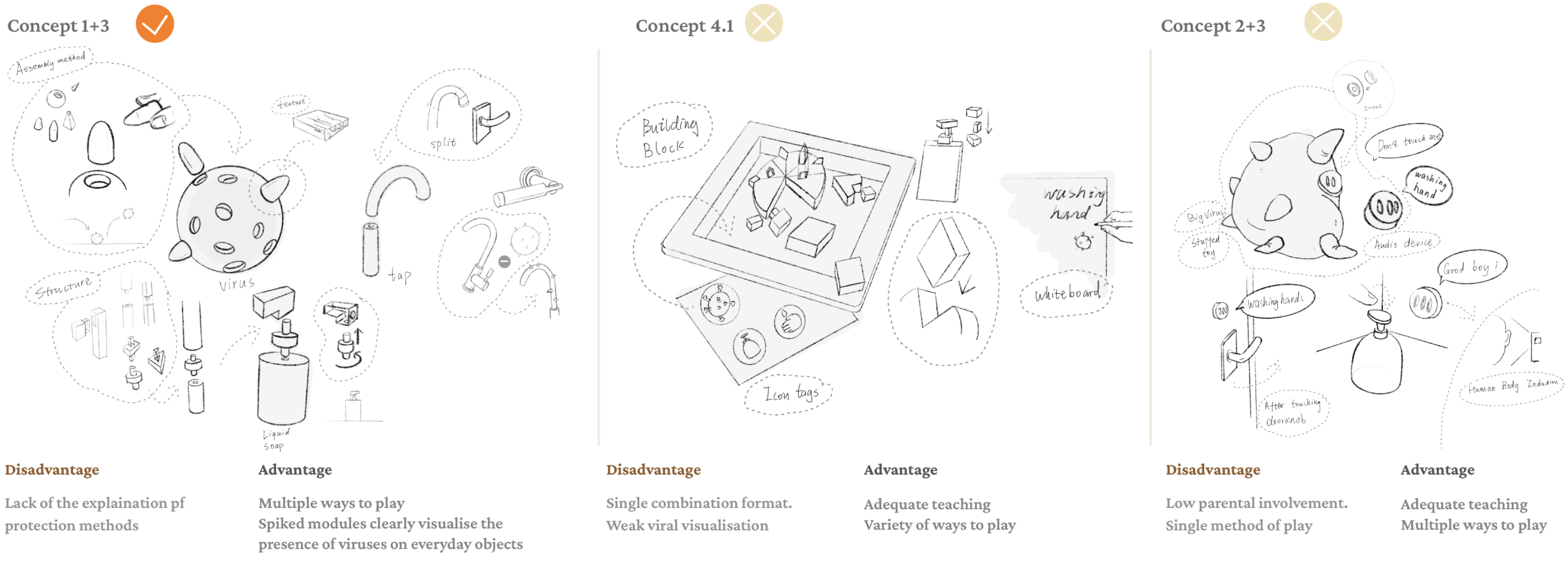
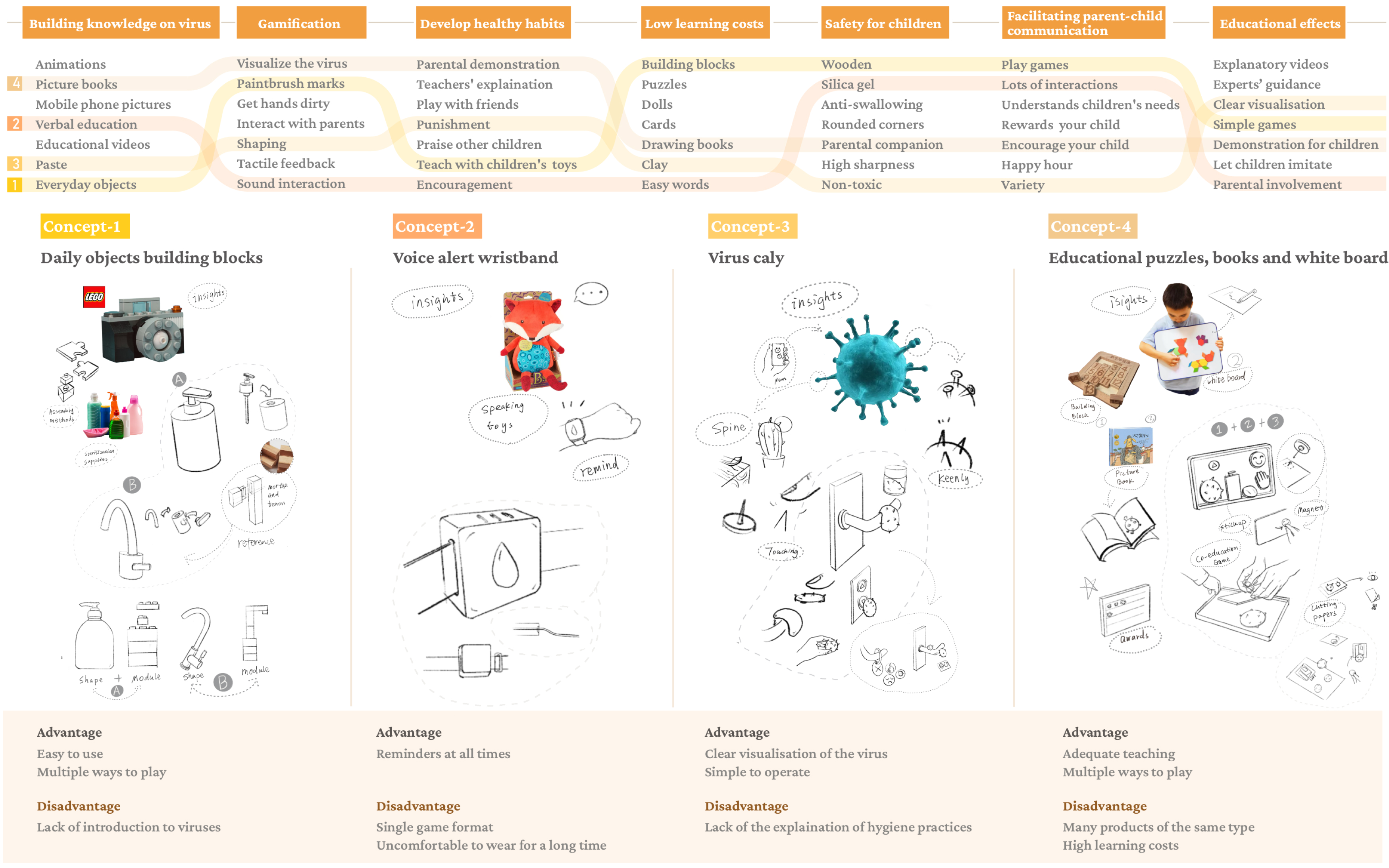 I then iterated on these initial concepts, combining the strengths of each to refine them into three final design proposals. After evaluating the advantages and limitations of each, I ultimately selected Concept 1 — a modular educational toy for children — as the final design direction.
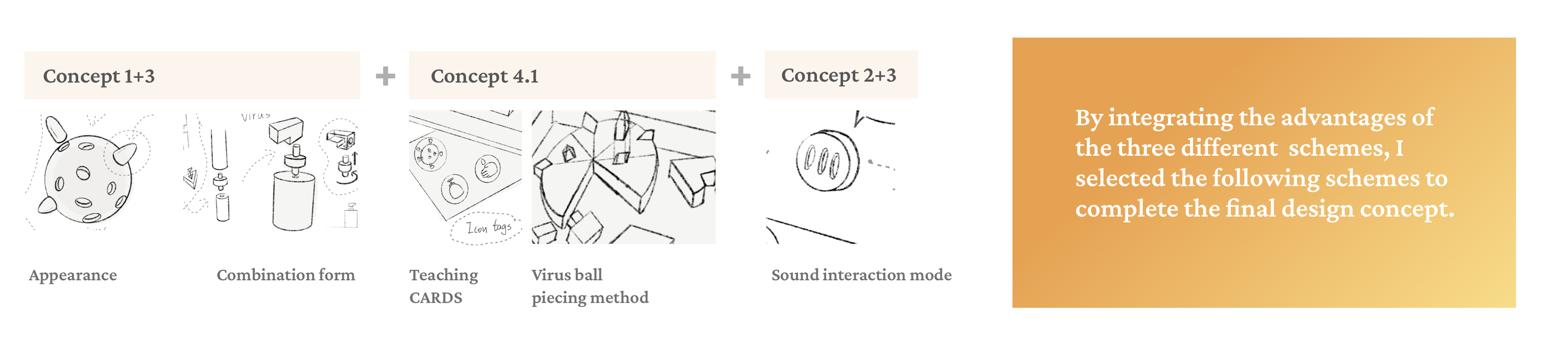
 By combining the strengths of the three schemes, I selected the most effective elements to form the final design concept.
Design concept
This educational tool helps children develop awareness of protection and hygiene habits by assembling everyday objects and virus models. Using educational cards and interactive sounds, children learn about self-protection—for example, understanding how viruses can attach to objects by placing viral spikes on a door handle model
Prototype
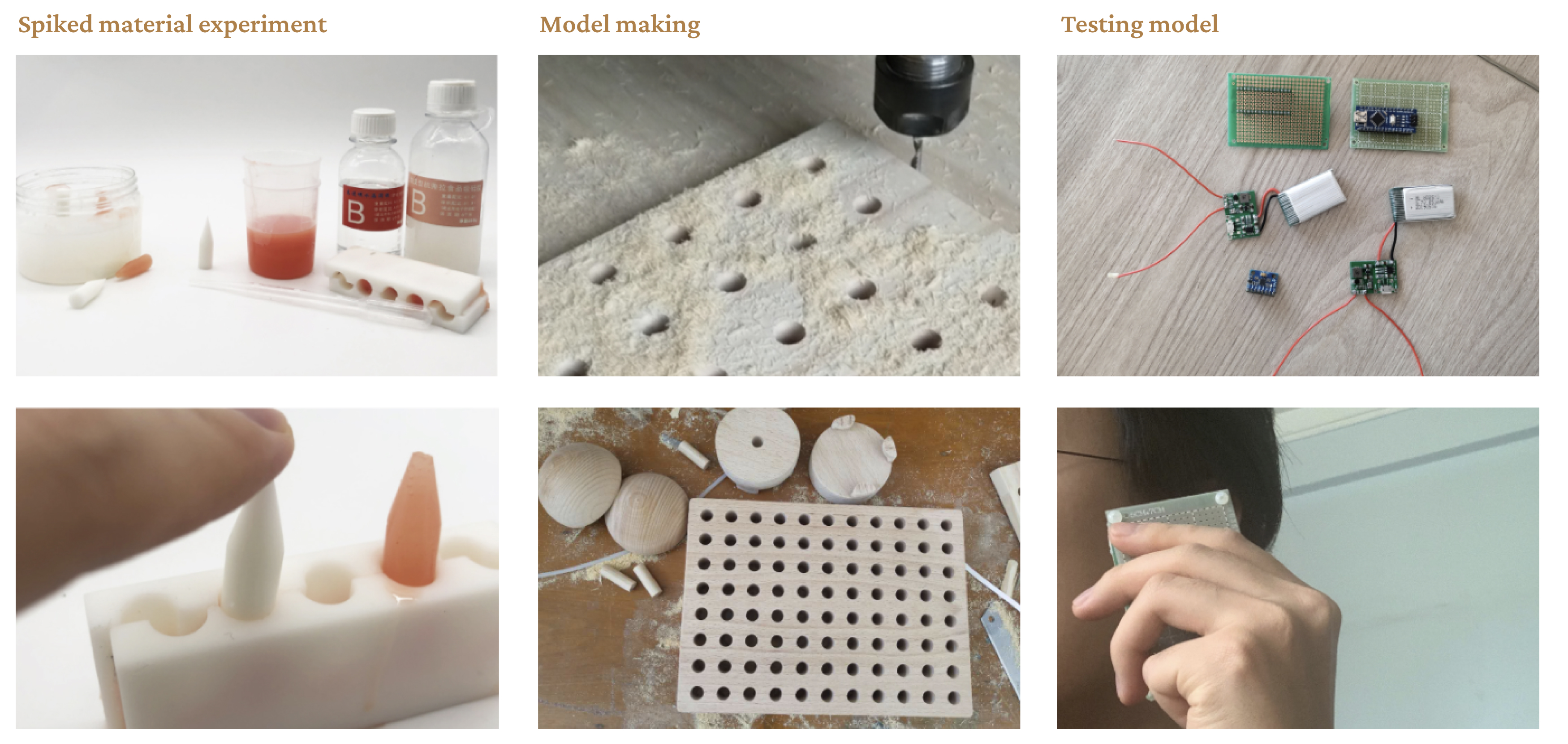
I created test models through three trials. First, I tested different silicone hardness levels to ensure the spikes’ safety. I then developed an audible alert module and a wooden prototype for later user testing
User test
The tool has three main functions: teaching the basics of epidemic prevention and control through cards; showing how viruses can harm the body by attaching viral spikes to everyday objects; and guiding children to learn proper handwashing by assembling models of water taps and hand sanitizer
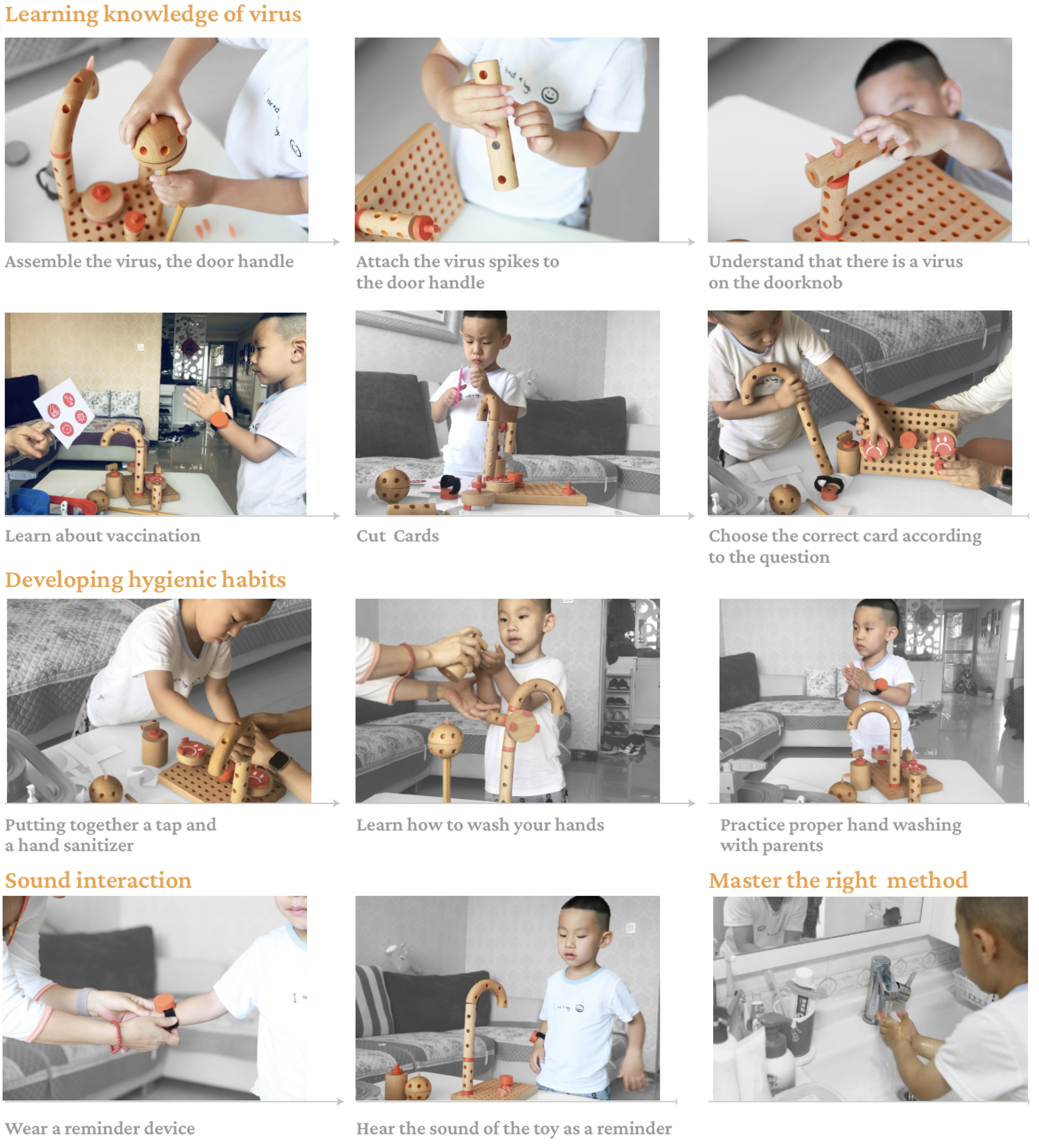
This project transforms abstract epidemic prevention concepts into playful, hands-on learning experiences. By combining assembly play, interactive learning, and practical hygiene training, it empowers children to understand protection, build healthy habits, and carry them into everyday life